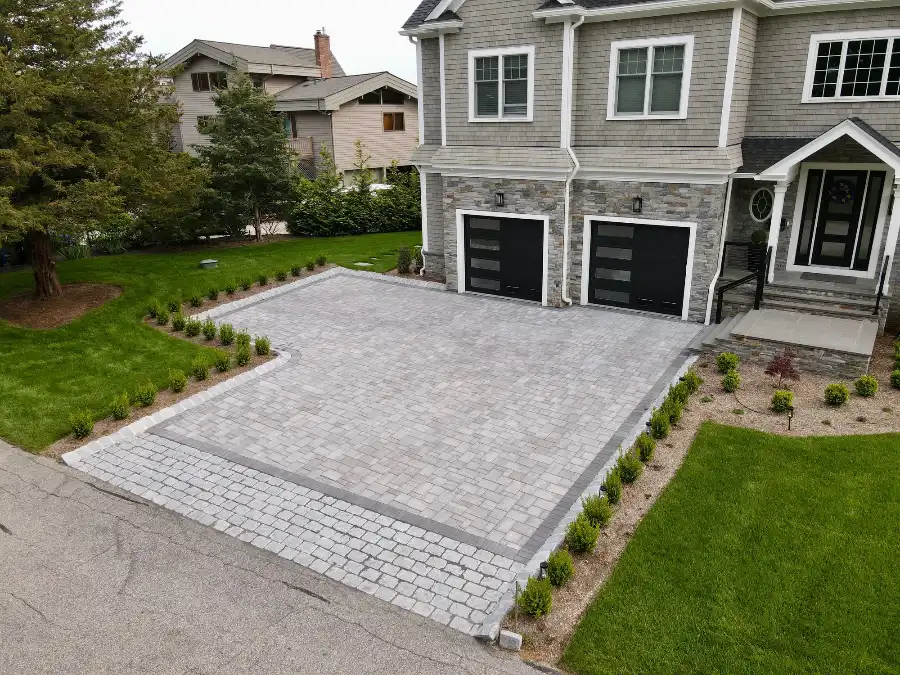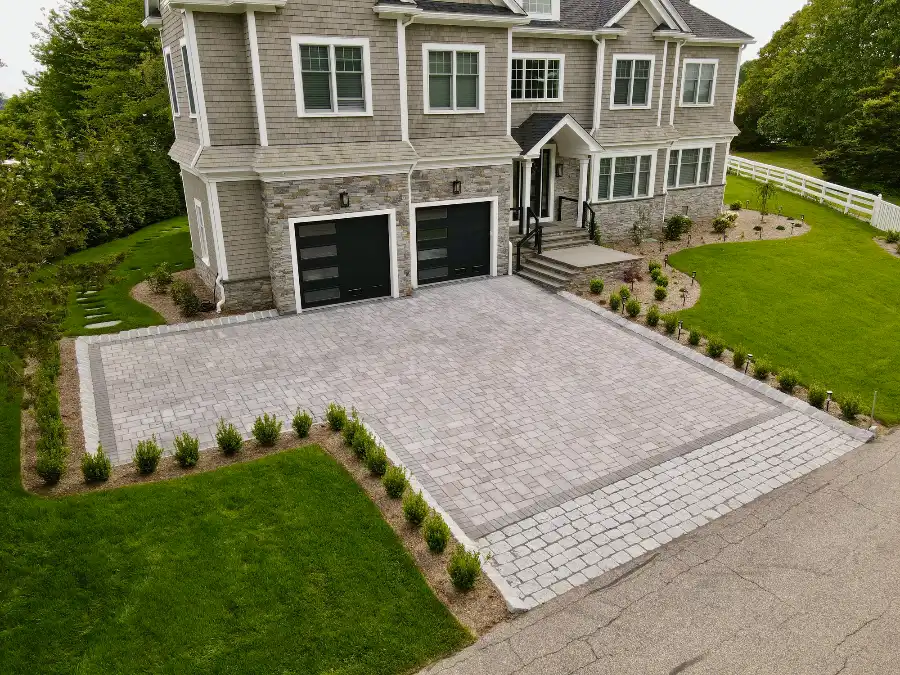
You can get backyard privacy without a fence by using plants, walls, and structures to block views. The best backyard privacy ideas mix a few of these, so the yard feels private and still looks natural. Each idea needs different space, time, and upkeep. Here is how we look at the options for Rhode Island yards.
Evergreen Screens and Layered Plantings
Evergreen trees and shrubs are the classic fence replacement. They keep their leaves or needles through the year, so the screen works in winter too. Arborvitae, junipers, and spruce are common choices in New England. American holly is another option that has a fuller, softer look.
Layering makes a screen look better than a single straight row. Plant tall evergreens in back, mid size shrubs in front, and low plants at the edge. The mix looks like a garden, not a wall. It also keeps the screen full even if one plant struggles.
Space is the main thing evergreens need. Many grow wide as well as tall, so they need room from the property line and from each other. A plant that fits today can crowd the yard in a few years. Ask for the full size of any plant before you buy it.
New evergreens also need care while they settle in. They need regular water in the first seasons, so the roots can spread. A layer of mulch around the base helps hold moisture. After that, most only need light trimming to keep their shape.
Walls and Seat Walls for Privacy
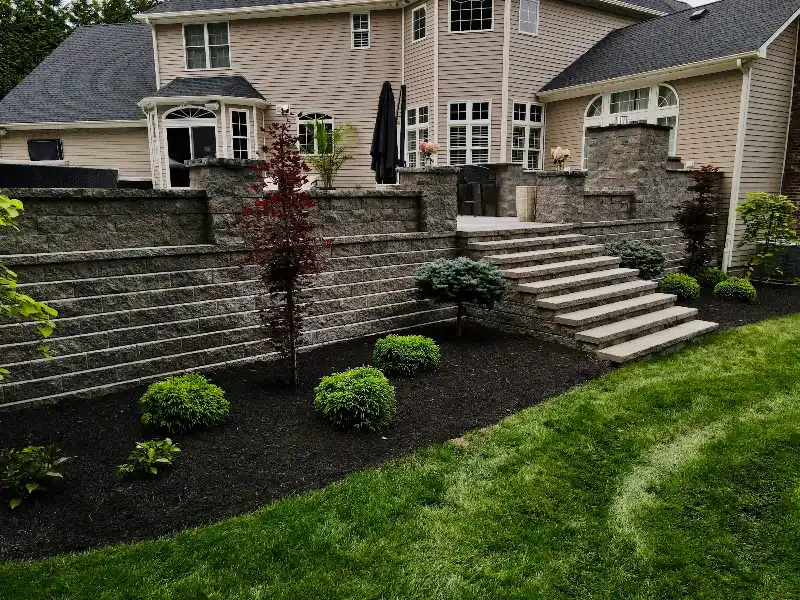
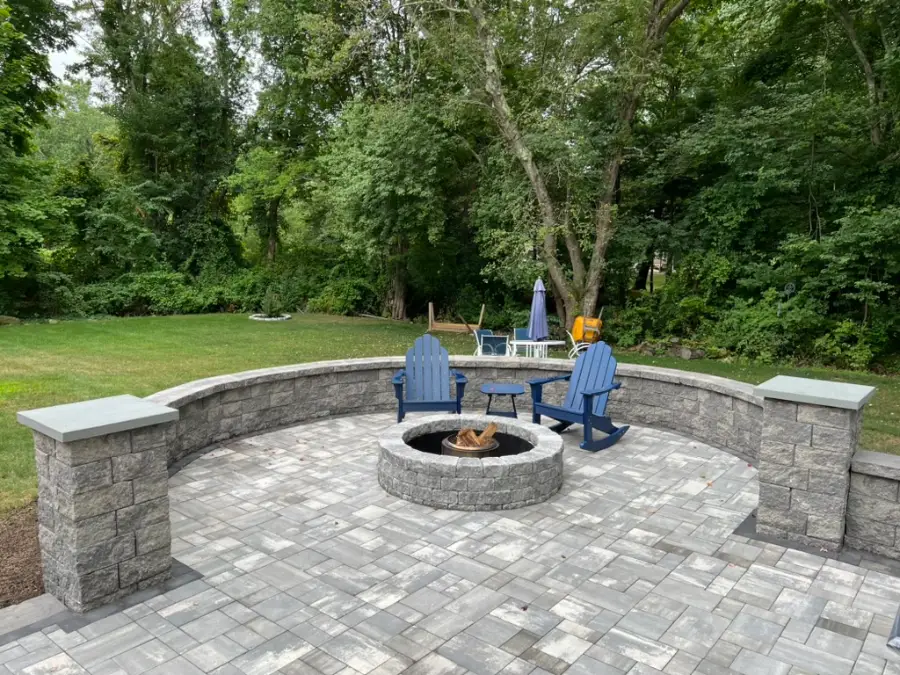
A wall can block a view the day it is built. Plants take years to fill in, but stone and block do not. A low wall around a patio can also act as a seat. That gives you privacy and extra seating in one feature.
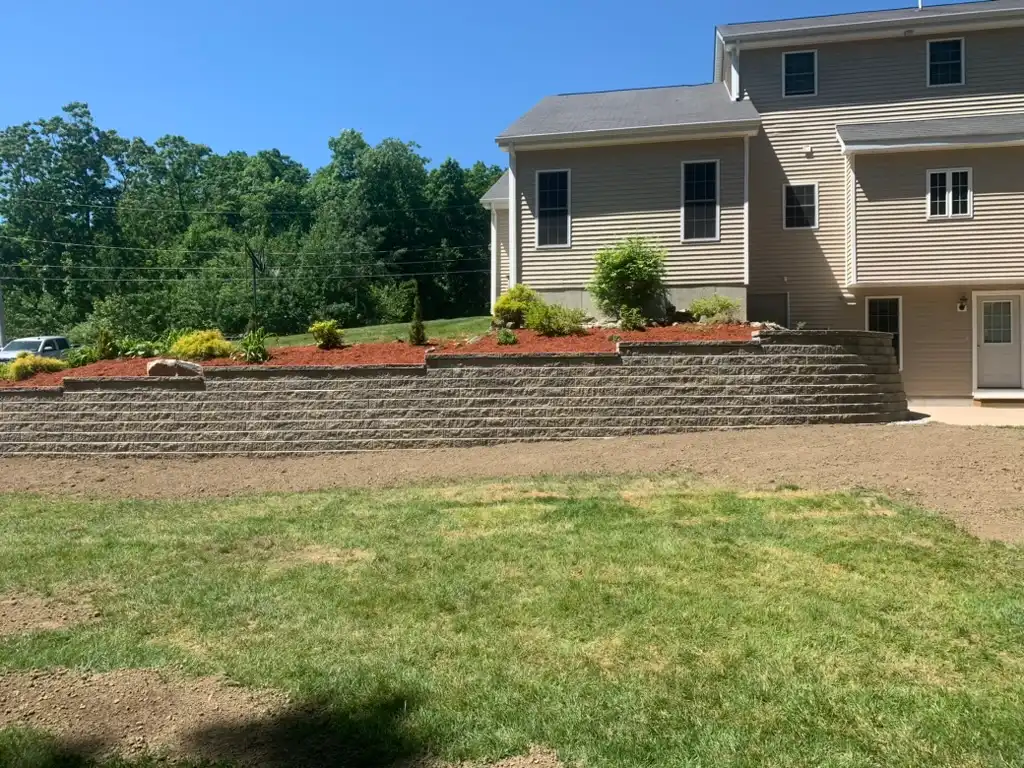
Raised walls can also help with sight lines. A planting bed on top of a wall adds height and softness. The plants then grow up from a higher point, so the screen reaches more of the view. Our retaining walls work often does this kind of job.
Taller walls need more planning. Height, drainage, and the base all matter, and some walls need a permit. Our post on permits for patios and retaining walls in Rhode Island explains what to check. Your town has the final say on its own rules.
Pergolas and Sunken Patios
A pergola can cover the part of the yard that others see from above. Rooftop and upstairs views are hard to block with plants alone. Add vines or fabric panels, and you get shade and a bit of cover. A pergola works best next to the house or over a patio.
A sunken patio sits lower than the yard around it. The grade change itself becomes a screen, because the walls around the patio block sight lines. It needs good drainage, since water wants to run downhill into the lowest spot. That planning is part of how we build outdoor living spaces.
Patios and fire pits can sit inside these private areas. A seating area with a fire pit feels more like a room when it has walls or plants around it. We build fire pit areas like this as part of our patio work. If you plan a fire pit, check the local rules first.
Think about the view you want to keep, too. A screen that blocks every angle can make a yard feel closed in. Leave a gap where you want to see a tree, a pond, or a sunset. Privacy works best when it frames the good parts.
Ornamental Grasses and Soft Screens
Tall ornamental grasses give a seasonal screen with movement. Switchgrass and feather reed grass grow tall and upright in many parts of New England. They sway in the wind and look good in fall. They are cut back in late winter, so the screen is thin in the cold months.
Mixing grasses with evergreens gives you both. The evergreens hold the view in winter, and the grasses fill in summer. That mix also gives the yard color and texture through the seasons. It can help a new planting look full sooner.
Soft screens work well in small spots. If your yard is tight, a narrow bed with tall grasses and a few shrubs may fit when a row of trees will not. Even a small yard can fit a screen when you plan the layers well. You can also look at the best plants for Rhode Island to find ones that suit your yard.
What Each Option Needs in Space and Upkeep
Here is a quick way to compare them. Each one asks for something different. Use this list to match the idea to your yard.
- Evergreen screens need width and time to fill in. They need light trimming and some water at first.
- Seat walls and raised walls need a solid base and good drainage. They need little upkeep once built.
- Pergolas need a firm footing and a spot near the house. Vines need trimming each year.
- Sunken patios need the most digging and drainage planning. They need regular clearing of leaves and debris.
- Ornamental grasses need sun and a yearly cutback.
Think about how you use the yard. If you sit on the patio at night, you may need privacy at seat height. If you eat at a table, you may need a screen on one side. Standing in the spot where you will sit helps you see what neighbors can see.
Most good plans use more than one idea. A seat wall near the patio, a few evergreens at the corner, and grasses in front can work together. Start with the view you most want to block. Then add layers over time.
Plan Your Private Backyard with Precision Edge
You do not need a fence to have a private yard. Plants, walls, pergolas, and patios can all do the job. Pick a mix that fits your space and the upkeep you want. Then build it in layers so it grows into the yard.
At Precision Edge, we plan and build patios, walls, and planting beds across Rhode Island. Our team can look at your yard, see where the views come from, and suggest what fits. You can also see our garden bed design and shrub installation service. Ready to start? Contact us today and we will set up a visit.