Retaining walls fail most often because of water, a weak base, or a wall that was not built strong enough for the soil it holds back. Frost makes each of those problems worse in Rhode Island. A wall that is built right can last many decades. A wall that skips the hidden work may start to lean in just a few winters.
A retaining wall has a hard job. It holds up a slope of soil, and that soil is heavy. Rain makes it heavier, and freezing makes it push. Knowing why walls fail helps you spot trouble early. It also helps you judge any wall you plan to build.
How Does Water Make a Retaining Wall Fail?
Water is a major threat to any retaining wall. Soil that is soaked weighs more than dry soil. All that weight pushes on the back of the wall. If the water has no way out, the pressure builds until the wall moves.
A good wall gives water a path. Behind the blocks, the crew places clean crushed stone. At the bottom, a drain pipe carries water away to a safe spot. Fabric between the stone and the soil keeps dirt from clogging the stone. Without these parts, water gets trapped behind the wall.
Drainage from above matters too. Water from a roof, a driveway, or a slope can pour toward the wall. That adds even more water to the soil behind it. Good planning sends that water around the wall instead of into it. Ask any builder how they will handle runoff.
Why Do a Thin Base and Frost Heave Hurt Walls?
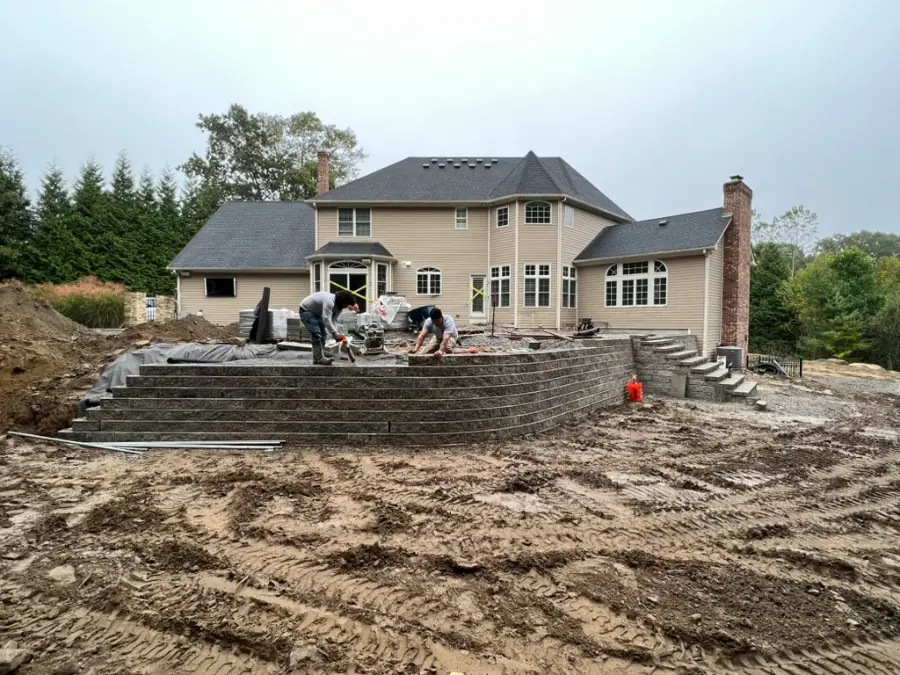
The base is the footing of the wall. It is a trench filled with compacted crushed stone, and the first row of blocks sits on top. If the base is too thin or not packed well, the wall can settle. Even a small dip at the bottom can twist the rows above it. The damage often shows up a year or two later.
Frost heave is the next problem. In winter, water in the soil freezes and swells. That swelling can push up on a wall and push it out. In spring, the ground thaws and drops back down, but the wall does not always go back to where it was. After many freeze and thaw cycles, small shifts add up.
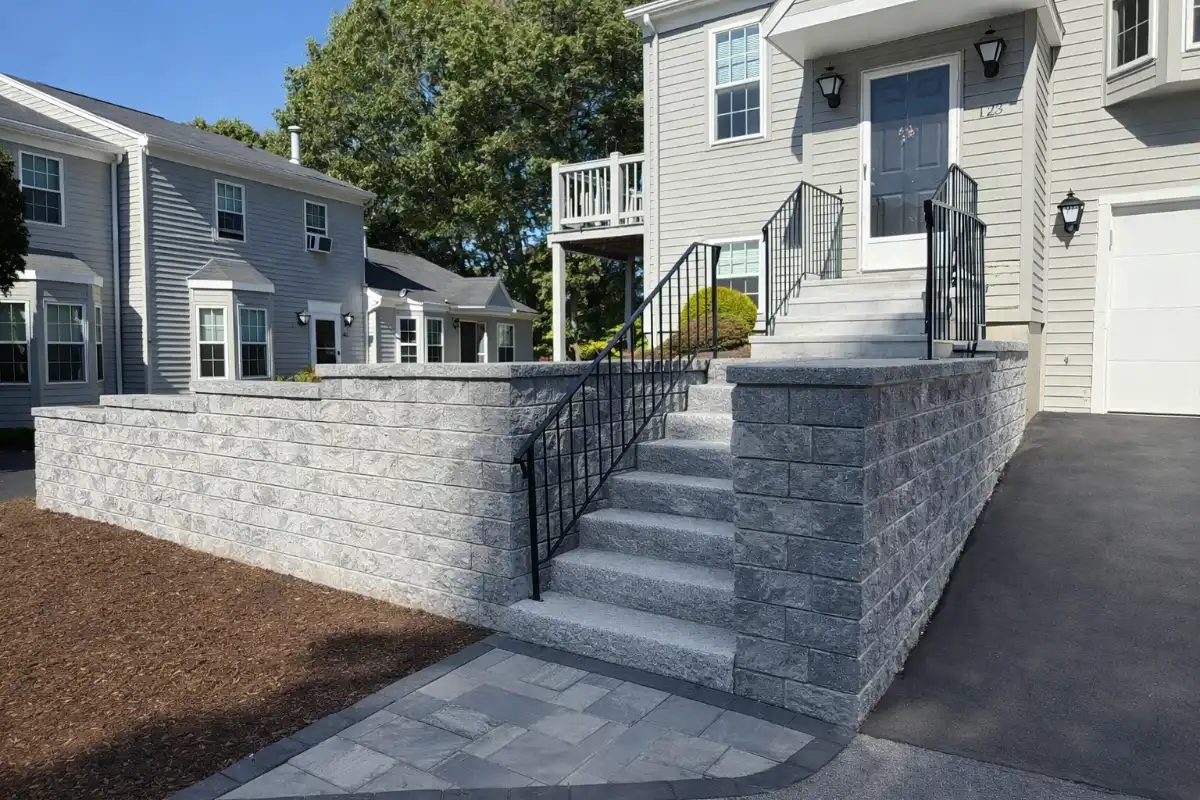
A deep, well-drained base helps a lot. Stone drains better than soil, so there is less water to freeze under the wall. At Precision Edge, we dig the base for each wall to match the job instead of using one depth for everything. We think the hidden work should be the most careful work. You can see the kinds of walls we build on our retaining walls page.
Why Do Tall Walls Need More Than Blocks?
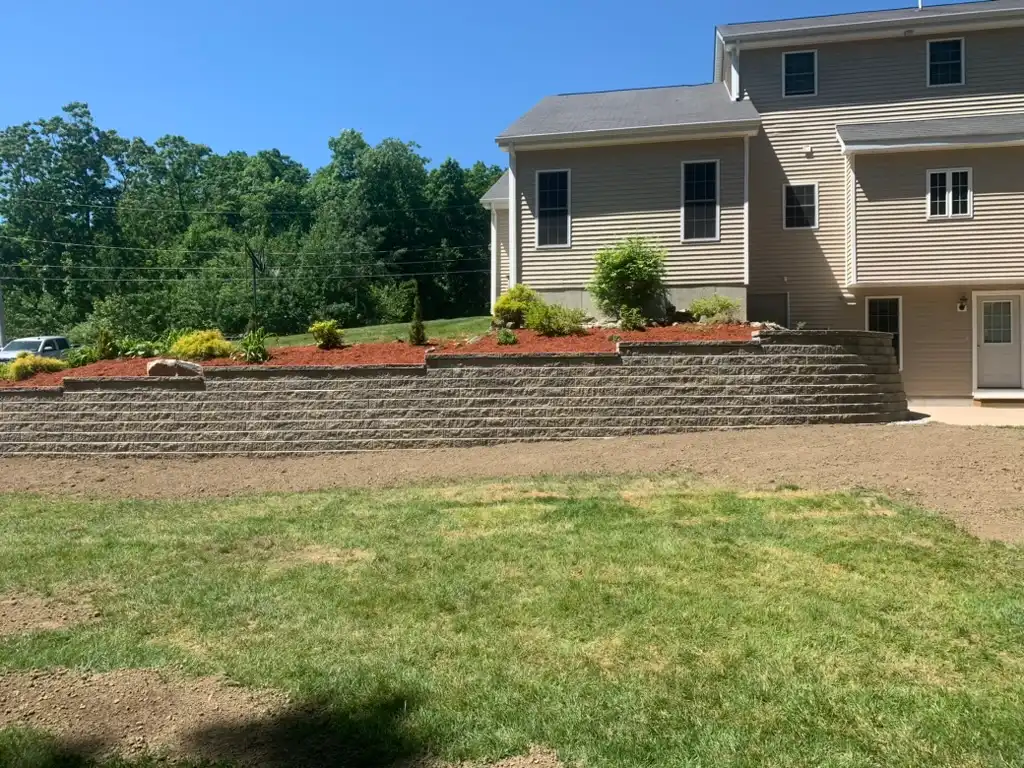
A short garden wall and a tall wall are not the same job. The taller the wall, the more soil it holds, and the more it pushes. Blocks alone may not be enough for that push. Using a material that is too light for the height is a common reason walls fail.
Geogrid is one fix. It is a strong mesh that lays between the rows of blocks and reaches back into the soil. The soil and the grid hold each other in place. Together they act like one big mass instead of a thin wall standing alone. A tall wall without geogrid may lean forward over time.
Height also brings rules. Taller walls often need an engineer, a permit, or both. The rules depend on your town, so check before you plan. Our post on permits for patios and retaining walls in Rhode Island is a good place to start. Your town office has the final word on height limits.
What Are the Warning Signs of a Failing Wall?
Most walls give signs before they fail. Walk along yours a few times a year and look closely. Check after heavy rain and again after the spring thaw. Here is what to watch for:
- A wall that leans forward or looks tilted
- Bulges in the middle of the wall
- Cracks in blocks or stone
- Gaps between blocks, or blocks that have slid out
- Soil washing out through or around the wall
- Pooling water at the base after rain
Not every sign means the same thing. A small crack in one block is not the same as a bulge across the whole wall. A bulge tells you that something is pushing hard from behind. If you see leaning or bulging, take it seriously and get it checked soon.
Plants and trees can also play a part. Big roots can push on a wall. Cutting down a tree can leave roots that rot and leave holes in the soil. Keep an eye on the ground around the wall as well as the wall itself.
Should You Patch or Rebuild a Retaining Wall?
The answer depends on why the wall is failing. Small problems on the surface can often be repaired. A loose cap, one cracked block, or a small gap may only need a fix. In those cases, the wall behind the surface is still sound.
A leaning or bulging wall is different. That usually points to a problem in the base, the drainage, or the wall design. Fixing the face of the wall will not fix those causes. If you only patch it, the wall will likely keep moving. In many cases, the safer repair is to take it down and rebuild it the right way.
A rebuild is a chance to fix what went wrong the first time. The crew can add a deeper base, new drainage, and geogrid where it is needed. They can reuse blocks that are still in good shape. Our post on the benefits of installing a retaining wall explains why a sound wall is worth the effort.
Worried About Your Retaining Wall?
Retaining walls fail because of water, weak bases, frost, and walls that are too tall for the way they were built. Look for leaning, bulging, cracks, gaps, and soil washing out. At Precision Edge, we can look at your wall and tell you whether it needs a repair or a rebuild. You can also read about our full range of hardscape work. Contact our team to set up a visit.