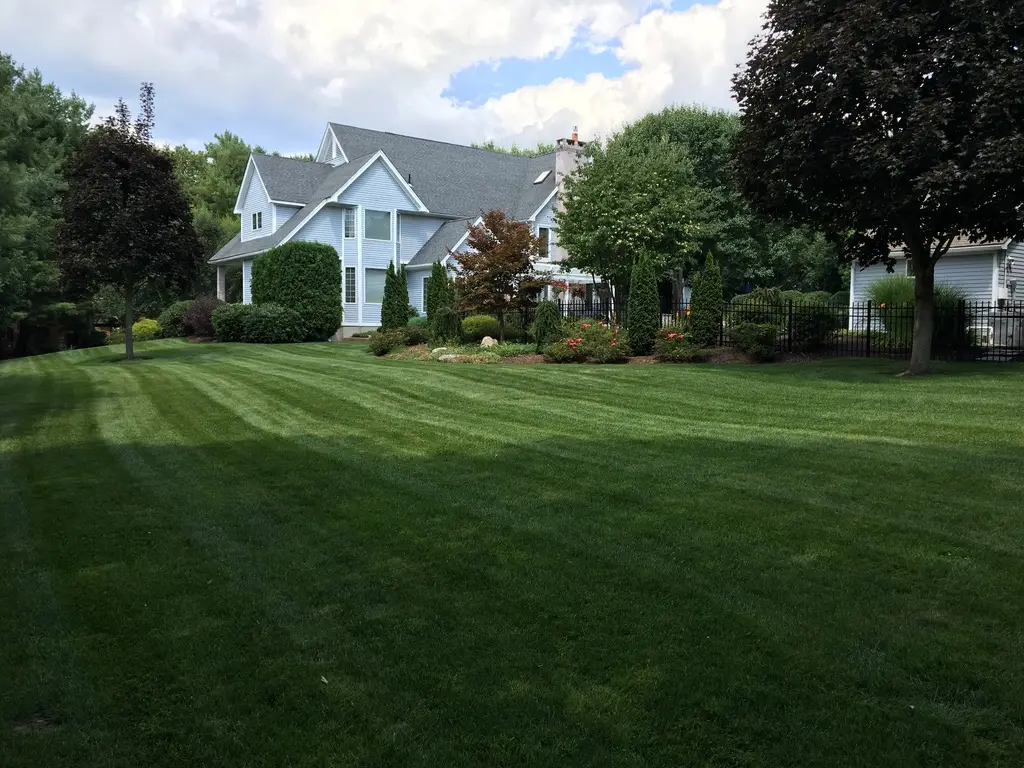
The best grass seed for Rhode Island is a blend of cool season grasses, matched to your sun, your soil, and how much foot traffic your lawn gets. Tall fescue, Kentucky bluegrass, perennial ryegrass, and fine fescues are the main choices here. No single seed wins in every yard. The right pick depends on the spot and on how your family uses it.
Rhode Island has warm summers and cold winters. Cool season grasses grow well in that kind of weather. They grow the most in spring and fall, and they slow down in the heat of July and August. Warm season grasses, like those used in the South, are a poor match for our winters. That is why local lawns are built from cool season types.
What Are the Main Cool Season Grasses?
Tall fescue has deep roots, and deep roots help it get through dry spells. It has wide blades and holds up well to kids and pets. It grows in clumps, so it does not spread to fill bare spots by itself. It does best when the seed goes down thick.
Kentucky bluegrass makes a thick, soft lawn. It spreads by underground stems, so it can fill small bare spots over time. It likes full sun. It is also slow to sprout, and you may wait a few weeks to see green.
Perennial ryegrass sprouts fast. That makes it useful when you want green quickly or need something to hold soil in place. It does well with foot traffic. Many seed mixes include it for that reason.
Fine fescues have thin, soft blades. They handle shade better than most other choices. They also do fine in poorer soil and need less feeding. They do not like heavy play, so they suit quiet parts of a yard.
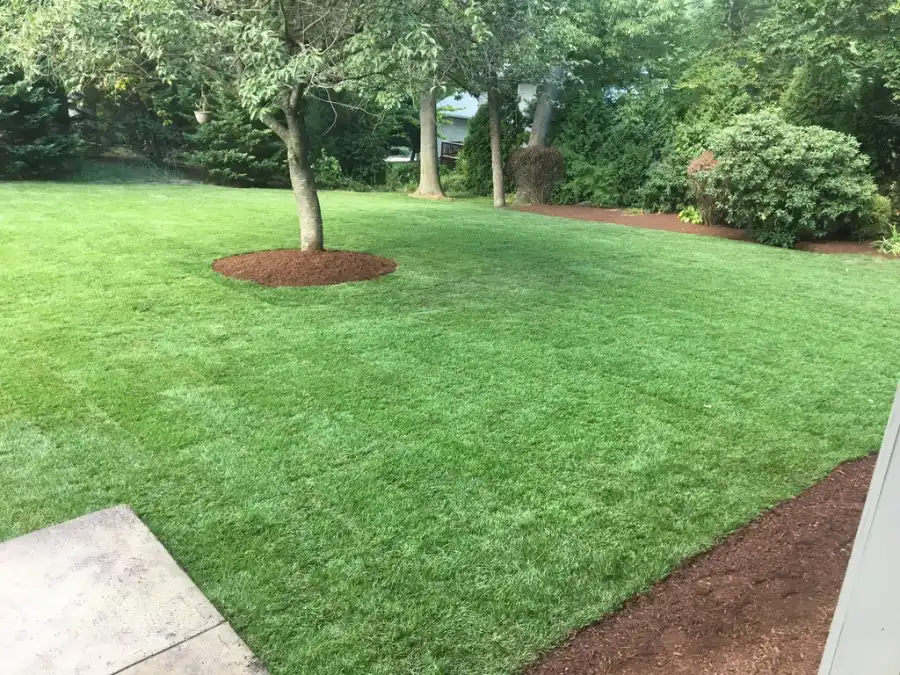
Which Seed Works for Sun, Shade, and Sandy Soil?
Start by watching your yard for a day. Note which spots get sun from morning to evening. Note which spots sit in the shade of a house, a fence, or big trees. The light a spot gets will narrow your seed choices fast.
For full sun, Kentucky bluegrass, tall fescue, and perennial ryegrass all work well. A mix of these gives you a lawn that fills in and stays green. For shade, look for a mix that is heavy in fine fescue. Keep in mind that every grass needs some light. Deep shade under thick trees may be better suited to mulch or shade plants.
Sandy soil is the next thing to check. Parts of South County have sandy ground that drains very fast. Water moves through it quickly, so the lawn dries out between rains. Tall fescue and its deep roots are a good fit there. It also helps to mix compost or topsoil into the ground before you seed.
Heavy clay or wet soil has its own needs. Water sits on top and roots stay weak. Loosening the soil before you seed gives roots a better start. If water pools in one spot, fix the drainage first, because seed will not fix that.
What Seed Should You Use for Kids, Dogs, and Busy Yards?
A play yard needs grass that can take a beating. Look for mixes with perennial ryegrass and tall fescue. Ryegrass sprouts quickly, and tall fescue grows tough. Kentucky bluegrass can also help, because it slowly repairs worn spots.
Dogs are hard on lawns. Urine can leave brown patches, and running wears paths in the turf. Tough, thick grass helps a lot, and so does rinsing the spot with water after your dog goes. Reseeding the worn spots in fall keeps the lawn thick.
Think about where the traffic is. A path from the driveway to the back door gets stepped on every day. A side yard might get no traffic at all. You can use a tougher mix in the busy areas and a softer mix elsewhere. Your lawn does not have to be one seed from edge to edge.
Why Is a Blend Better Than One Seed?
A blend mixes several types of the same grass kind. A mix combines different grass kinds, like tall fescue with bluegrass. Either way, you get grasses that cover for each other. One may handle shade while another handles sun. If one struggles in a hot summer, the others hold the lawn together.
Read the label on every bag. The label lists the grass types in the bag and what share of the bag each makes up. It also lists the germination rate, the weed seed amount, and the date the seed was tested. Fresh seed with low weed content is a better choice than an old bag with a long-ago test date. If the label is hard to read, ask the store or a lawn pro.
At Precision Edge, we match the seed to the site instead of using one bag for every job. We look at light, soil, slope, and how the family will use the space. That same thinking goes into every lawn installation. If you want to know how that process works, our post on what lawn installation is walks through it.
What Should You Do Before You Spread Seed?
Good seed still needs good prep. Clear out old thatch, rocks, and weeds. Loosen the top layer of soil so the seed can touch the ground. Seed that sits on top of dead grass often does not take. Rake it lightly so the seed gets covered.
Water is the next job. New seed needs the top layer of soil kept damp until the grass sprouts. After that, water deeper and less often so roots grow down. Skipping water for a few hot days can undo the work. Plan your schedule before you plant.
Timing matters as much as the seed. Cool season grasses do best when they start in the right part of the year. Our guide to the best time to plant grass seed in Rhode Island covers that in detail. Read it before you buy anything.
Once the lawn is in, regular care keeps it thick. Mowing at the right height, feeding at the right times, and clearing leaves all help. Our lawn care and weekly maintenance service covers those jobs through the season. A good seed choice and steady care work together.
Ready to Choose Seed for Your Lawn?
The best grass seed for Rhode Island depends on your light, your soil, and your daily use. Pick a blend of cool season grasses, read the label, and prep the ground well. If you would rather not guess, our team can look at your yard and suggest a plan. The job can include prep, seeding, and early care. Contact Precision Edge to talk about your lawn.