The right choice depends on the look you want, the height of the wall, and how your yard is shaped. When you compare a concrete retaining wall vs natural stone, both can hold back soil for many years if they are built well. Stone gives you an old New England look, while block gives you a clean and even one. Here is how the two compare, so you can pick with confidence.
Look and Feel
Natural stone has no two pieces alike. Each stone has its own shape, color, and texture. That gives a wall a rugged, one of a kind look. It fits well with older homes and wooded lots.
Rhode Island has a long history with stone walls. Walk through almost any town and you will see fieldstone walls running along old roads and property lines. Farmers built many of them from stones cleared out of their fields. A natural stone retaining wall carries on that look.
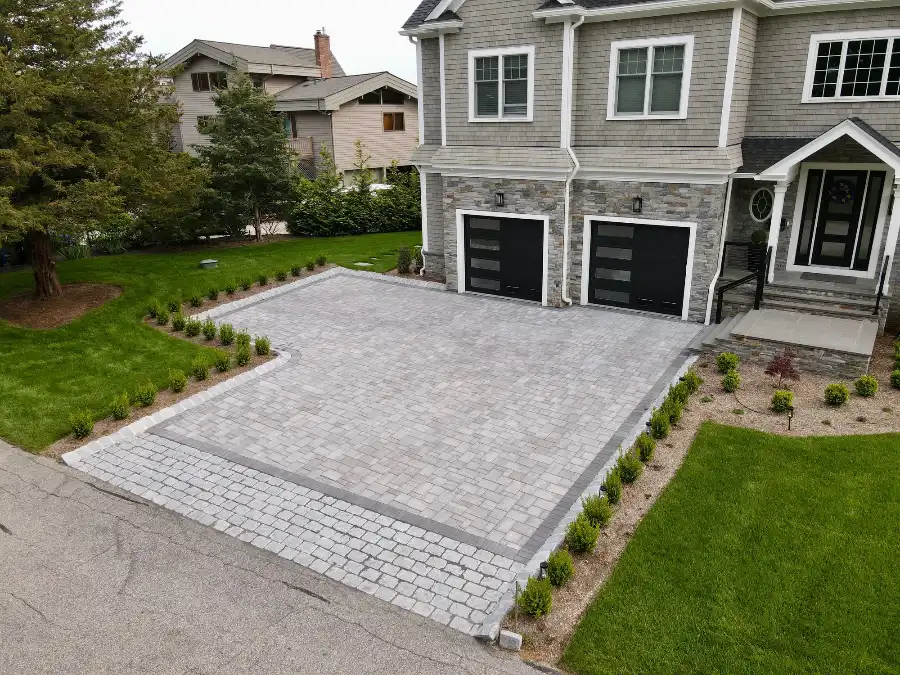
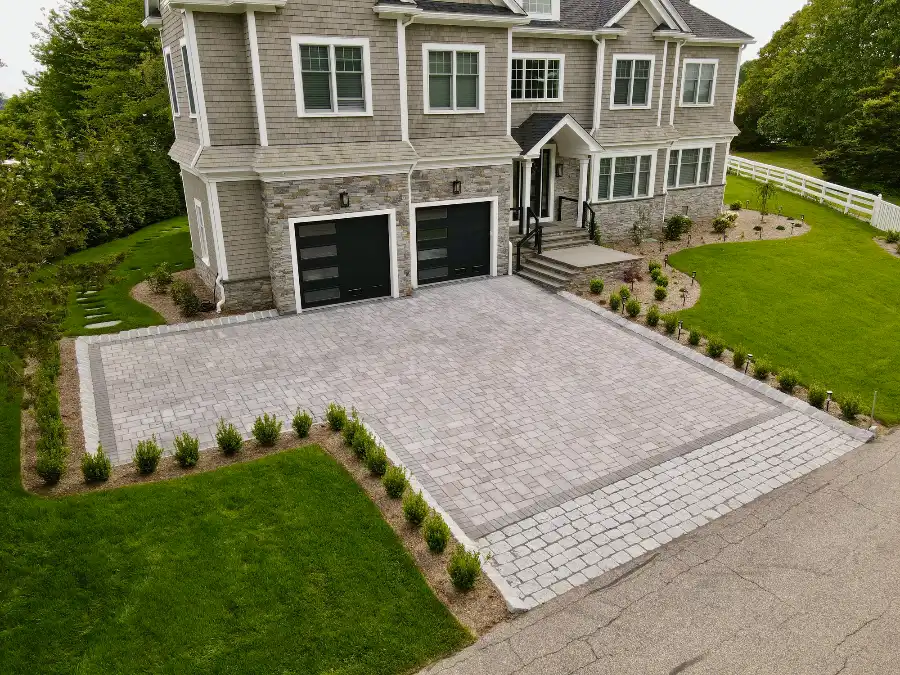
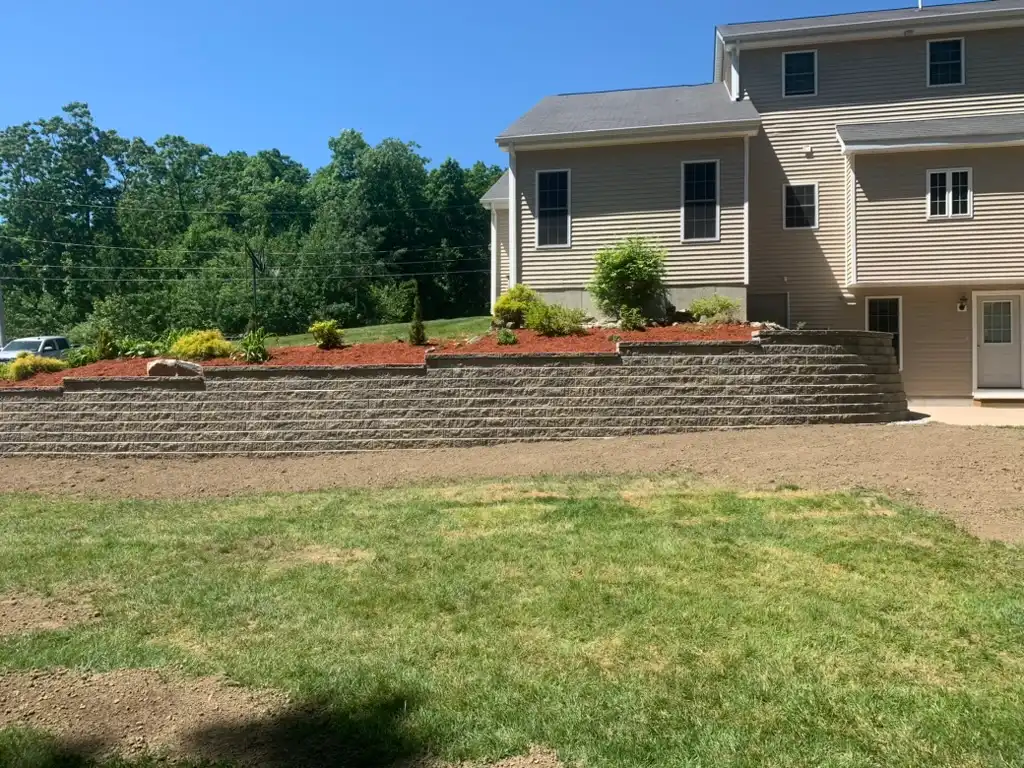
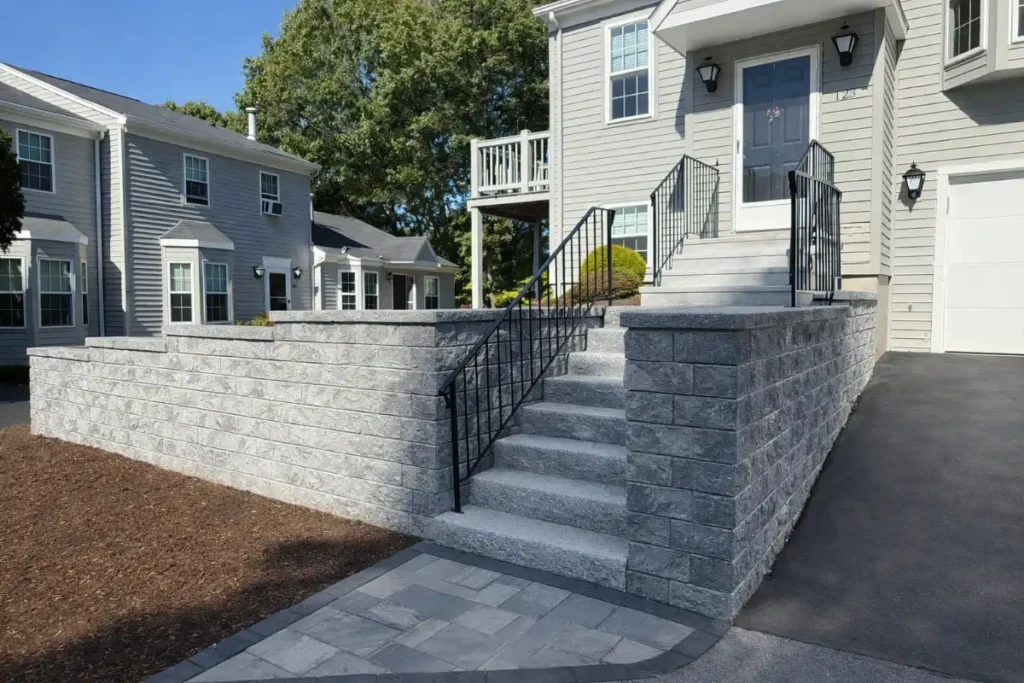
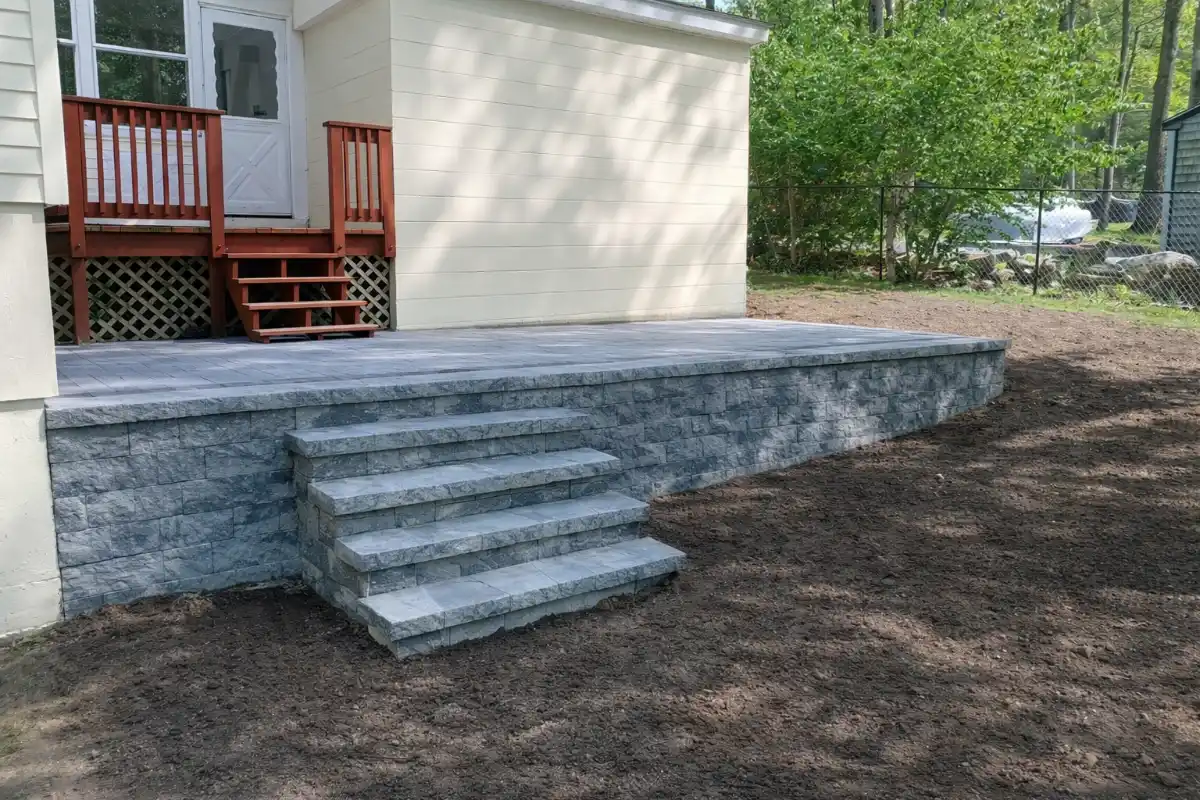
Concrete block walls look more even. The blocks are made in set sizes and shapes, so the lines are straight and tidy. Many block systems come in several colors and textures, including faces that look like split stone. That makes them a good fit for modern homes, patios, and paver driveways.
Neither look is better. It comes down to what fits your house and your taste. We can bring samples to the property, so you can see them next to your home and your landscape.
Think about what sits around the wall, too. A wall next to a paver patio or driveway often looks best in a matching style. A wall in a wooded corner of the yard may suit natural stone. You want the wall to look like it belongs to the whole yard.
How Each Wall Is Built
A segmental block wall goes together in layers. The crew digs out a trench and fills it with compacted gravel for the base. The blocks then stack on top, one course at a time, and lock together. Gravel behind the wall and a drain pipe help water get out.
Taller block walls use geogrid. This is a strong mesh that is laid between courses and runs back into the soil behind the wall. It ties the wall and the soil together so they work as one. Without it, a tall wall can lean or bulge over time.
Natural stone walls are built by hand, one stone at a time. The builder picks each stone, turns it, and fits it into place. This takes a lot of skill and patience. A good stone wall has strong joints and a solid base, not just nice looks.
Both types need the same basics. A firm base, good drainage, and proper backfill matter more than the material. A wall made of beautiful stone will still fail if water builds up behind it. Our post on the benefits of a retaining wall explains why this work matters.
Height and Strength
Block walls are often the choice for taller or more demanding jobs. The units are made to the same size, so an engineer or builder can plan how they carry weight. Geogrid adds strength for the taller sections. Block makers publish guidelines for how their systems should be built.
Stone walls can be strong, but height is more limited when they are stacked without help. A low stone wall around a garden bed or a patio edge is common. A tall stone wall holding up a steep bank needs more planning. We may suggest block, or a mix of both, for those spots.
Any tall wall may need a permit or an engineer. Rules depend on your town and the height of the wall. Our post on permits for patios and retaining walls in Rhode Island is a good place to start. Check with your town before you build.
We are a Unilock Authorized Contractor, and Unilock makes retaining wall systems in block form. We like block systems because they are made to work as a set. Each part is designed to fit with the others. Our retaining walls page shows some of what we build.
Lifespan and Upkeep
Both materials can last for many decades when they are built right. Stone has been standing in New England for hundreds of years. Block walls are newer, but well built ones are made to last as well. The base and drainage matter most.
Here are a few things to expect from each. They are small, but they are worth knowing. Both types age in their own way.
- Natural stone can shift in spots over time and may need a stone reset.
- Concrete block can chip at the edges or fade a bit in the sun.
- Both need a clear path for water to drain from behind the wall.
Frost is the big test in Rhode Island. Water freezes and expands, and it pushes on whatever is in its way. That is why the gravel base and the drain behind the wall matter so much. A wall that drains well handles winter far better than one that does not.
Repairs are different for each type, too. A block that is damaged can often be swapped for a new one. A stone that has shifted may need to be lifted out and set again. Either job is easier when the wall is built on a good base from the start.
Plan to look at your wall each spring. Check for leaning, gaps, or soil washing out. Small fixes done early are easier than big ones later. If something looks off, we can come take a look.
Choosing a Retaining Wall with Precision Edge
Pick natural stone if you want an old, handmade look and the wall is low. Pick concrete block if you want clean lines, a tall wall, or a system built for strength. In many yards, a mix of both works well. Your slope, your soil, and your house all help decide.
At Precision Edge, we design and build retaining walls and other masonry and hardscape projects across Rhode Island. Our team can walk your yard and explain which material makes sense and why. Ready to talk about your wall? Contact us today and we will set up a visit.